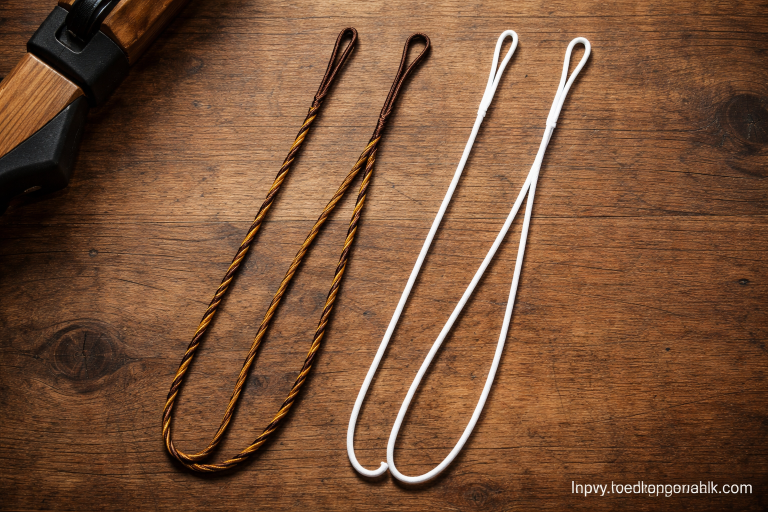
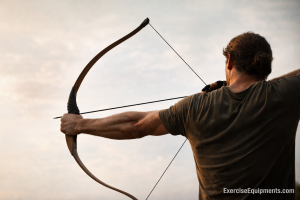
 There is a moment when most people first see a recurve bow that is difficult to explain. It is not the complexity that draws them — there is no complexity to speak of. It is the opposite. Two limbs, a string, a riser. The curved tips that bend away from the archer when the bow is unstrung and give the bow its name. Something about the clean, uncluttered lines of it feels right in a way that is almost instinctive. Ancient, even. Like the thing was already in your memory before you ever saw it.
This is what a recurve bow is, what it asks of you, and why the people who shoot one rarely want to stop.
What Makes a Recurve Bow a Recurve
The name describes the shape. On a standard straight-limbed bow, the limbs bend uniformly when drawn. On a recurve bow, the tips of the limbs curve away from the archer in the unstrung position — and when the bow is drawn, those curved tips store additional energy before releasing it into the arrow. More energy stored in the same draw length means a faster arrow from a shorter bow. The recurve shape is, at its core, an elegant solution to a physics problem.
That is the technical explanation. The felt experience is different. When you draw a recurve, the weight builds steadily and continuously — there is no peak and no let-off, no valley where the resistance drops and holds for you. You feel the limbs loading through your fingers, through your back, through your entire draw. Everything is connected. Everything is immediate. The bow does not manage the energy for you. You are the machine.
What the Recurve Bow Asks of You
This is what separates the recurve from every other bow available today: it offers no mechanical assistance at full draw. A compound bow’s cam system releases most of the draw weight the moment you reach anchor, leaving you holding a fraction of what you pulled. A recurve holds you to every pound, every inch of the draw, through the entire aim and release.
This means the recurve is an honest instrument. It will tell you things about your form, your consistency, and your strength that a compound bow would quietly absorb and compensate for. A slight torque in your bow hand, an inconsistent anchor, a release that pulls left — the recurve reports all of it, faithfully, with every arrow. Experienced archers describe this not as a flaw but as a feature. The recurve teaches you to shoot because it has no mechanism to hide what you are doing wrong.
It also means the recurve demands more practice to maintain. Put it down for two weeks and you will feel the difference. The muscle memory that builds accurate, repeatable form on a recurve is more fragile and more dependent on regular reinforcement than compound shooting. The archers who love this bow tend to shoot it often — not because they have to, but because they want to.
The Takedown Recurve: Practical and Versatile
Most modern recurve bows are takedown models — three pieces that separate into a riser and two limbs, small enough to pack into a case the size of a laptop bag, reassembled in minutes. This makes the recurve one of the most portable serious bows available. It also makes upgrading straightforward: as your strength and skill develop, you replace the limbs rather than the entire bow. The riser — often the more expensive and considered purchase — stays with you for years.
The takedown design is also why the recurve is the most adaptable bow in archery. A single riser can carry light limbs for target practice, medium limbs for field shooting, and heavier limbs for hunting. You are not buying a new bow each time your requirements change. You are evolving the same instrument.
The Recurve in Competition and Hunting
The recurve bow is the only bow used in Olympic archery. This is not an accident. The Olympic format values the archer’s skill above the equipment’s capability — and the recurve, with its direct transfer of human effort into arrow flight, reflects that value precisely. Every gold medal in Olympic archery has been won with a recurve. If competition at the highest level of the sport is something you aspire to, there is no alternative.
For hunting, the recurve asks more of the hunter — not more from the equipment, but more from the person holding it. Effective hunting range is typically shorter than with a compound, which means closer shots, more patience, and a different kind of engagement with the pursuit. Many bowhunters choose the recurve specifically for this reason. Getting within 20 yards of a deer requires a level of skill and woodsmanship that hunting at 60 yards with a compound does not. The recurve is not the easier path into the woods. It is the more rewarding one for the people who choose it.
Who the Recurve Bow Is For
Recurve archers consistently describe their relationship with the bow in terms that compound archers rarely use. They talk about feel, connection, and the bow as an extension of the body rather than a piece of equipment. They tend to shoot the same bow across all disciplines — target, field, hunting — because the familiarity matters. The bow becomes known to them in a way that only comes from repetition and from a design that puts the archer entirely at the centre of the outcome.
If what draws you to archery is the idea of a tool that simply works — nothing to tune, nothing to service, nothing between your hand and the arrow except physics and skill — the recurve bow is the instrument that delivers exactly that. It will not make the shot easier. It will make every shot that lands feel entirely yours.
For those ready to take that further, Lancaster Archery’s beginner bow guide covers the full process of choosing and fitting a first recurve bow with the depth and honesty the decision deserves.