 The first time most people see a compound bow up close, their reaction is some version of the same thing: that is a lot going on. Cables running through pulleys, wheels at each end of the limbs, a riser that looks more like engineering than archery. Compared to the simple elegance of a recurve or longbow, a compound looks almost mechanical — which is exactly what it is, and exactly why it works so well.
This is what a compound bow is, how it functions, and why all that complexity exists in the first place.
The Problem a Compound Bow Solves
A traditional bow — recurve, longbow — requires you to hold the full draw weight throughout the entire aiming process. If your bow is set to 50 pounds, you are holding 50 pounds the moment the string reaches your anchor point. Your muscles are working against the stored energy of the limbs for every second you are aiming. That is tiring, it causes tremor, and it limits how long you can hold a steady aim before fatigue forces the shot.
A compound bow solves this with a mechanical advantage built into the cam system. You pull the full weight to draw — but once the cams rotate through their peak, the draw weight drops dramatically. By the time you reach full draw, you are typically holding only 15 to 20 percent of the peak weight. On a 60-pound bow with 80 percent let-off, that means holding 12 pounds at full draw instead of 60. You can hold that comfortably, steadily, and for much longer — giving you the time to aim precisely without fighting your own equipment.
Everything else on a compound bow exists to support and refine that central idea.
The Parts That Make It Work
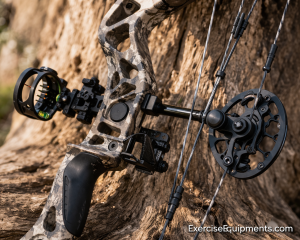
The riser is the central section of the bow — the handle you hold and the platform everything else attaches to. Most modern risers are machined from aluminium or carbon, designed for rigidity and minimal vibration. Accessories mount here: the sight, the arrow rest, the stabiliser, the quiver.
The limbs extend from each end of the riser and store the energy when the bow is drawn. They flex under tension and release that energy into the arrow at the shot. Compound limbs are shorter and stiffer than traditional limbs because the cam system handles the mechanical work they would otherwise do.
The cams — the wheels or elliptical shapes at each limb tip — are what define a compound bow’s character. They are the mechanism that creates let-off, controls the draw cycle, and determines how aggressively the weight builds as the string is drawn back. Single cam systems are simpler to maintain and tune. Binary cam systems use two linked cams for synchronisation. Hybrid systems combine elements of both. The differences matter when you are selecting or tuning a bow — less so when you are simply understanding how they work.
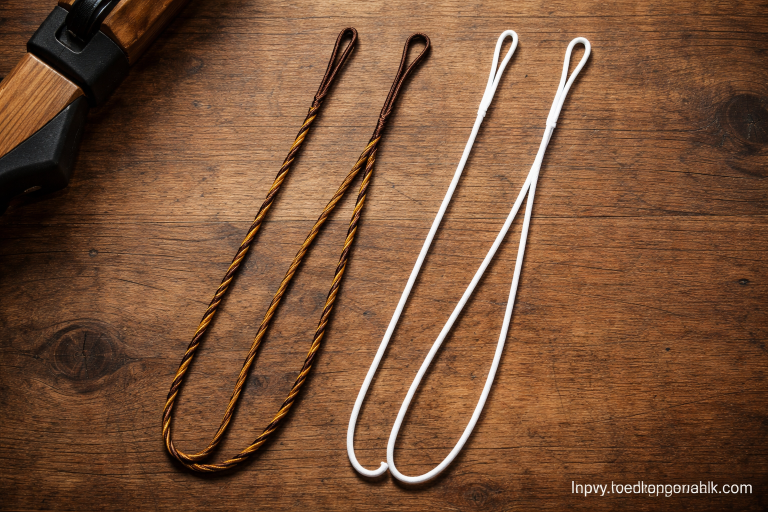
The cables and strings connect the system. The bowstring transfers energy from your draw to the cams. The cables connect the cams to the opposing limb tips, maintaining tension and controlling cam rotation. If the compound bow looks complicated, it is largely because of these cables — but their function is straightforward: they are the mechanical linkage that makes the cam system operate as designed.
What Let-Off Actually Feels Like
Understanding let-off intellectually is one thing. Understanding it in your hands is something else.
When you begin drawing a compound bow, the resistance builds — smoothly or sharply depending on the cam design — until it reaches peak weight. That is the hardest point in the draw cycle. Then, as you continue pulling through the peak, you feel the cams roll over and the resistance drops. You arrive at a position called the “valley” — full draw — where the weight has released and what you are holding feels almost effortless compared to what you just pulled through.
The back wall is the physical stop at the end of the draw cycle. A consistent, firm back wall is something experienced archers look for because it gives a repeatable anchor point — the same position every draw, which is the foundation of consistent accuracy.
This is why compound bows allow for much higher draw weights than most archers could manage on a traditional bow. The human body can pull more weight than it can hold. The compound separates those two requirements, using your pulling strength to load the limbs while letting the mechanical advantage handle the holding.
Speed, Forgiveness, and the Trade-Offs Between Them
Not all compound bows are designed around the same priorities. Two characteristics sit in tension with each other: speed and forgiveness.
Speed comes from aggressive cam designs, shorter axle-to-axle lengths, and lower brace heights — the distance from the grip to the string at rest. A low brace height means the string is in contact with the arrow for a longer portion of the shot, which translates to more energy transferred and higher arrow velocity. It also means more time for shooter error to influence the arrow’s path.
Forgiveness comes from longer brace heights and longer axle-to-axle lengths. The shorter the string’s contact with the arrow, the less any torque or inconsistency from the archer’s hand and wrist affects the shot. A more forgiving bow rewards average form more consistently.
For a hunter shooting at deer from a tree stand at 25 yards, forgiveness matters more than the extra 20 feet per second a speed-oriented bow provides. For a competitive archer shooting known distances with consistent form, speed becomes more relevant. Understanding where you sit on that spectrum helps clarify which bow design suits you — though for most people considering their first compound, starting with a more forgiving setup is the decision experienced archers consistently recommend.
Why the Complexity Is Worth It
The compound bow is more complex than a traditional bow for the same reason a car is more complex than a bicycle. The complexity serves a purpose: it makes something difficult more manageable for more people, without removing the skill and practice required to do it well.
Younger archers, older archers, and people with limited upper body strength can use a compound bow effectively where the physical demands of a heavier traditional bow would make consistent accuracy nearly impossible. The let-off does not shoot the arrow for you. It gives you time to aim it properly — and that time is where skill lives.
The sport of archery and the practice of bowhunting grew significantly when the compound bow became widely available in the 1970s. That growth has continued. The technology is more refined now than it has ever been, and the floor for entry — in terms of cost and physical requirement — is lower than it has ever been. Bowhunters United’s introduction to compound bows is a clear and practical starting point if you are ready to take the understanding in this article into the process of choosing one.
But first — understanding the machine is the right place to start. Now you understand it.