When your child shows interest in gymnastics, creating a safe practice environment at home becomes a top priority. Gymnastics mats are essential equipment that transforms any space into a secure training area, protecting your young athlete from injuries while building confidence and skills.
Many parents initially try alternatives like yoga mats, carpet, or even outdoor grass practice. However, these makeshift solutions can be dangerous and limit your child’s progress. Professional gymnastics mats provide the proper cushioning, stability, and safety features necessary for effective home training.
This comprehensive guide will help you understand the 5 essential types of gymnastics mats that every parent should consider, ensuring your child can practice safely while developing their gymnastics abilities at home.
Why Gymnastics Mats Are Essential for Home Training
Gymnastics mats serve multiple critical functions beyond basic cushioning. They provide consistent surface texture that prevents slipping, offer proper shock absorption for landing impact, and create designated practice areas that help children focus on their routines.
Professional-grade mats also maintain their shape and support over time, unlike household alternatives that compress or shift during use. According to the USA Gymnastics organization, proper matting is fundamental to injury prevention and skill development in gymnastics training.
The investment in quality gymnastics mats pays dividends in your child’s safety, confidence, and progression. These specialized surfaces enable children to practice tumbling, handstands, cartwheels, and other fundamental skills without the fear of injury from hard surfaces.
The 5 Essential Types of Gymnastics Mats for Parents
1. Panel Mats (Folding Gymnastics Mats)
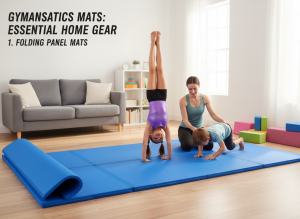
Panel mats are the most versatile and popular choice among parents setting up home gymnastics spaces. These gymnastics mats fold into compact sections, typically measuring 4 feet by 8 feet when unfolded, with thickness ranging from 1.5 to 2.5 inches.
The folding design makes storage convenient in smaller homes, and the moderate thickness provides excellent cushioning for basic tumbling skills. Panel mats work perfectly for practicing cartwheels, rolls, handstands, and beginning tumbling passes.
Most panel mats feature durable vinyl covers that resist tears and clean easily with disinfectant wipes. The handles built into the folding sections make transportation simple for moving between rooms or taking to outdoor practice sessions.
2. Crash Mats (Thick Landing Mats)
For children practicing more advanced skills like back handsprings or dismounts from furniture, crash mats provide essential protection. These thick gymnastics mats typically measure 4 to 8 inches in thickness, offering superior shock absorption for high-impact landings.
Crash mats are particularly valuable when your child progresses beyond basic skills and begins attempting more challenging maneuvers. The extra cushioning reduces joint stress and builds confidence for trying new skills safely.
While crash mats are larger and less portable than panel mats, they’re indispensable for serious home training setups. Many parents position crash mats permanently in basement or garage training areas where space allows.
3. Cartwheel Training Mats
Cartwheel mats are specifically designed for beginning gymnasts learning this fundamental skill. These specialized gymnastics mats feature printed hand and foot placement guides that teach proper cartwheel form and spacing.
The visual guides eliminate guesswork for children and parents, ensuring correct technique development from the start. These mats typically measure around 2 feet by 6 feet and maintain moderate thickness for adequate protection without excessive bounce.
Cartwheel mats excel as teaching tools, making them perfect for parents who want to help their children master this essential gymnastics skill at home. The clear visual cues build muscle memory and confidence quickly.
4. Incline Mats (Cheese Wedge Mats)
Incline mats, nicknamed “cheese mats” for their triangular shape, help children learn forward and backward rolls while developing proper momentum and body positioning. These gymnastics mats create a gentle slope that assists with rotation and builds confidence.
The angled surface teaches children how to initiate rolls correctly and maintain proper form throughout the movement. Incline mats also support handstand practice by providing a slight angle that makes balance easier for beginners.
These versatile gymnastics mats work well in combination with panel mats, creating varied training surfaces that keep practice sessions engaging and progressive. The wedge shape stores easily against walls when not in use.
5. Flexi-Roll Mats (Roll-Out Mats)
Flexi-roll mats offer the ultimate solution for covering large practice areas quickly and efficiently. These gymnastics mats roll out like carpets, providing seamless floor coverage for tumbling passes and floor exercise routines.
The continuous surface eliminates gaps between mat sections, creating a professional practice environment that mimics competition floors. Flexi-roll mats work exceptionally well in garages, basements, or dedicated gymnastics rooms.
While more expensive than individual panel mats, flexi-roll systems offer superior safety and versatility for families with multiple children or those planning extensive home training programs.
Tools and Supplies for Gymnastics Mat Setup
Setting up your home gymnastics space requires more than just mats. Essential accessories include mat connectors that link panel mats securely, preventing dangerous gaps during practice sessions.
Storage solutions like mat carts or wall-mounted brackets keep your investment organized and accessible. Proper storage extends mat life and maintains clean practice areas.
Consider adding disinfecting supplies for regular mat cleaning, especially if multiple children use the equipment. Antibacterial wipes designed for vinyl surfaces work best for maintaining hygiene standards.
Common Mistakes Parents Make When Choosing Gymnastics Mats
Choosing Mats That Are Too Thin
The most frequent mistake involves selecting gymnastics mats with insufficient thickness for the intended activities. Mats under 1.5 inches thick provide inadequate protection for tumbling skills and can lead to injuries.
While thicker mats cost more, the investment in proper cushioning prevents medical expenses and builds confidence. Always prioritize safety over budget when selecting mat thickness.
Ignoring Mat Size Requirements
Many parents underestimate the space requirements for safe gymnastics practice. Small mats create dangerous boundaries that increase injury risk when children land near edges or miss the padded area entirely.
Measure your available space carefully and select gymnastics mats that provide adequate landing area beyond your child’s skill range. Extra safety margin accommodates growth and skill progression.
Buying Non-Commercial Grade Materials
Consumer-grade foam products marketed as gymnastics mats often lack the density and durability required for repeated impact. These products compress quickly and lose protective qualities within months.
Professional-grade gymnastics mats maintain their protective properties longer and provide consistent performance throughout their lifespan. The initial investment saves money compared to frequent replacements.
Tips and Advice for Selecting the Right Gymnastics Mats
Assess Your Child’s Current Skill Level
Match your gymnastics mats selection to your child’s abilities and immediate learning goals. Beginning gymnasts need different protection than intermediate athletes attempting advanced skills.
Consider your child’s progression timeline when making purchases. Investing in slightly advanced equipment accommodates growth without requiring frequent upgrades.
Prioritize Safety Features
Look for gymnastics mats with non-slip bottoms that prevent shifting during use. Vinyl covers should resist tears and maintain grip when slightly damp from practice sessions.
Check for proper foam density ratings that maintain shape under impact. High-quality materials provide consistent protection throughout the mat’s lifespan.
Plan for Growth and Skill Development
Purchase gymnastics mats that accommodate your child’s anticipated skill progression over the next two years. This approach maximizes your investment and prevents the need for frequent equipment changes.
Consider modular systems that allow adding components as skills advance. The International Gymnastics Federation recommends equipment that grows with athlete development for optimal training outcomes.
Maintaining Your Gymnastics Mats for Longevity
Proper maintenance extends the life of your gymnastics mats and ensures consistent safety performance. Regular cleaning prevents material degradation and maintains grip surfaces.
Store mats in dry locations away from direct sunlight, which can degrade vinyl covers and foam cores. Proper storage prevents compression set and maintains protective qualities.
Inspect mats regularly for signs of wear, including compressed areas, tears, or separated seams. Replace damaged gymnastics mats immediately to maintain safety standards.
Creating the Perfect Home Gymnastics Setup
Combine multiple gymnastics mats types to create comprehensive training environments that support skill development progression. Start with basic panel mats and add specialized components as your child advances.
Ensure adequate ceiling height and clearance around mat areas for safe skill practice. A minimum of 8 feet overhead clearance accommodates most beginning gymnastics skills safely.
Consider flooring underneath mats, as concrete requires additional padding compared to wooden subfloors. The complete system should provide protection while maintaining stability for skill development.
Conclusion
Selecting the right gymnastics mats for your home training setup requires understanding the 5 essential types and matching them to your child’s needs and skill level. Panel mats provide versatile basic protection, while crash mats handle high-impact activities safely.
Specialized mats like cartwheel trainers and incline wedges target specific skill development, and flexi-roll systems create professional practice environments. Each type serves unique purposes in supporting your child’s gymnastics journey.
Remember that investing in quality gymnastics mats prioritizes your child’s safety while enabling confident skill development at home. The right equipment transforms any space into a secure training environment that supports your young athlete’s growth and success in gymnastics.